
REVIEW · ON THE WATER
LA PINTA DARWIN’S LEGACY (Fri-Thurs)
The best part of La Pinta Darwin’s Legacy is how much of the Galápagos you see without unpacking every morning. In seven days, you reach Fernandina, western Isabela, Santa Cruz, Floreana, Rabida, and several smaller sites, with most sailing done at night. That leaves your daylight for wildlife, snorkeling, short hikes, and boat rides.
I like the small ship size, capped at roughly 48 passengers, and the way the schedule gives you several ways to experience each place. I also like that wetsuits, snorkeling equipment, kayaks, paddleboards, pangas, and a glass-bottom boat are provided. The main drawback is physical: rocky trails, wet landings, rolling seas, and frequent activity changes make this a busy trip, not a lazy cruise.
Key points at a glance
- Fernandina and western Isabela: See penguins, flightless cormorants, marine iguanas, turtles, and volcanic scenery in some of the archipelago’s least altered areas.
- Three or more activities on many days: Hike, snorkel, kayak, ride a panga, or use the glass-bottom boat.
- Around 48 passengers: The ship is large enough for useful comforts but small enough for personal service.
- Naturalist-led outings: Guides such as Kathy, Dries, Indi, David, Cathy, Indira, and Desi explain the wildlife, geology, and conservation work.
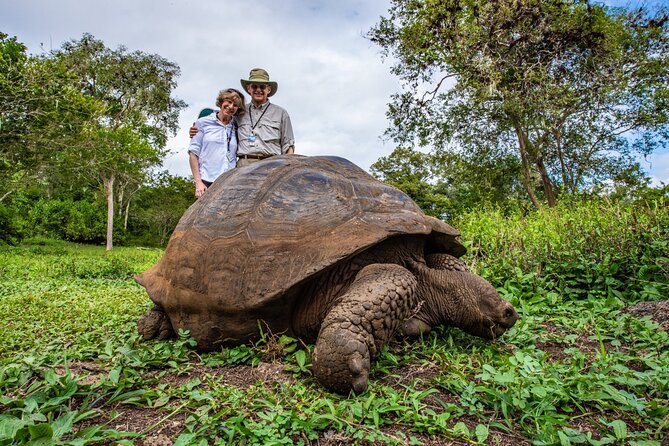
- Santa Cruz adds a land-based perspective: Visit the Charles Darwin Research Station and see giant tortoises roaming in the highlands.
- A luxury price with many extras included: Meals, guides, equipment, onboard medical care, and most excursions are covered, but park fees, flights, insurance, drinks, tips, and fuel surcharges are extra.
What the $7,946 price really buys you
At $7,946 per person, this is a major purchase. The value comes from the access and organization rather than from the ship alone.
Your fare includes six breakfasts, six lunches, and six dinners, certified naturalist guides, a doctor onboard around the clock, landing and facility fees, and the boats used for coastal exploration. Wetsuits and snorkeling gear are included, which saves suitcase space and avoids the nuisance of renting basic equipment after arrival.
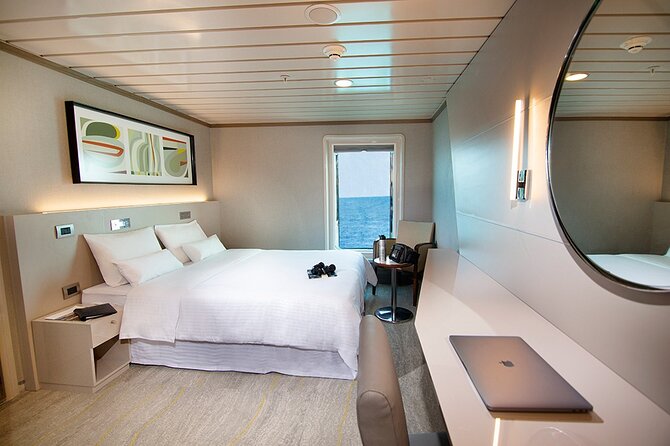
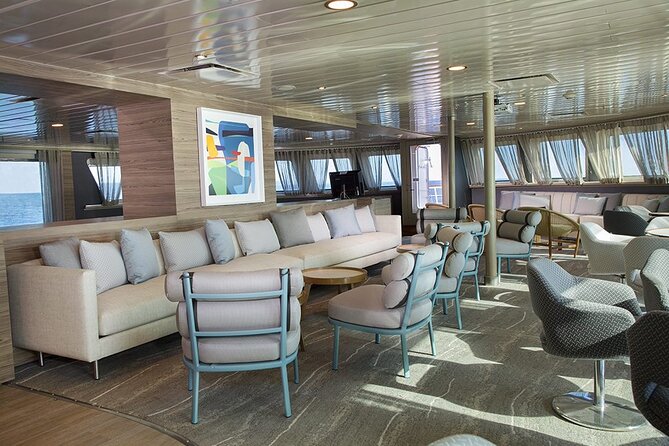
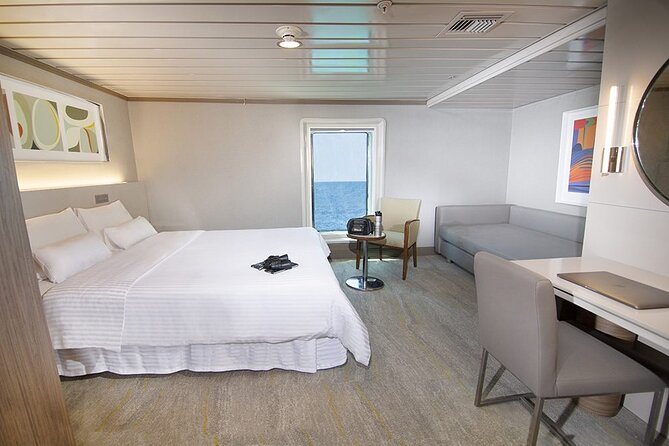
The schedule also uses the ship well. La Pinta sails mainly at night, so you are not wasting the best daylight hours crossing between islands. Your days are filled with outings, then you return to a comfortable base with a reading room, natural history library, outdoor terrace, coffee station, fitness room, and cabin safe.
The cost does not cover everything. You still pay for flights to and from the Galápagos, the Galápagos National Park entrance fee, the Ingala Transit Control Card, tips, gift items, alcoholic and soft drinks, medical and travel insurance, and any fuel surcharge. Airport transfers and flight details are handled separately, so ask for the full final price before committing.
Compared with a basic island-hopping plan, La Pinta gives you a much broader route and removes much of the daily transport puzzle. Compared with a larger ship, the passenger count helps the outings feel more controlled. You are paying for time, reach, equipment, and a well-managed routine.
Other boats worth checking in the world:
- Dubai Marina: Luxury Yacht Tour with Breakfast or BBQ Option
★ 4.7 · 21,528 reviews - Tenerife: Eco-Yacht Whale and Dolphin Watching and Swimming
★ 4.7 · 15,619 reviews - Dubai: The Luxury Yacht Tour with Live BBQ Option
★ 4.7 · 13,665 reviews
Day 1: Baltra starts with a quick change of pace
You meet at Seymour Airport on Baltra at about 10:00 in the morning. From there, you are transferred to the dock and board Yacht La Pinta. The first hours are practical: an introduction, an emergency boat drill, cabin assignment, and lunch.
In the afternoon, you head ashore on Baltra. The island is fairly flat and dry, and the walk brings you near bird colonies, sea lions, and land iguanas. Depending on conditions, you may also explore parts of the coast by panga.
This first day is less about checking off famous islands and more about getting used to the rhythm. You will move between ship, small boat, trail, and water several times during the week, so the safety briefing matters. After the afternoon outing, an evening briefing, welcome drink, and dinner set up the routine for the days ahead.
Pack your day bag before boarding. Keep sunscreen, a hat, water, sturdy footwear, and swimwear close by. Your checked baggage may be delivered later, and you do not want to dig through it before the first outing.
Day 2: Lava, turtles, and Fernandina’s wildlife
Punta Vicente Roca on Isabela is explored from a panga because there is no landing site. This is a fine example of why a small boat matters in the Galápagos. You can get close to cliff walls, lava flows, and layers of tuff stone while your guide explains how the coast was formed.
If the sea is calm, you may snorkel beside the cliffs. Green sea turtles are a likely highlight, though wildlife sightings and water access depend on conditions. The panga ride itself is worthwhile, with narrow coastal spaces and unusual volcanic shapes that cannot be seen from a standard trail.
In the afternoon, you reach Punta Espinoza on Fernandina. This is one of the strongest wildlife stops of the week. The island is young, spare, and almost stark in appearance, yet animals gather in surprising numbers. Look for Galápagos hawks, penguins, flightless cormorants, and marine iguanas.
The contrast is the point. You walk across dark volcanic ground while birds and reptiles go about their business nearby. Stay with your guide and follow park rules about distance. The animals may seem unconcerned, but your behavior still matters.
Day 3: Uplifted sea floor at Urbina Bay
At Urbina Bay, you land on the western side of Isabela and walk across ground that was once underwater. Tectonic uplift raised part of the ocean floor, leaving coral and shells visible inland. It is a useful reminder that the islands are not just pretty scenery. They are an active geological story.
The area is also known for large, colorful land iguanas. You might see giant tortoises, though that sighting is not guaranteed. The walk can be uneven, so shoes with a firm sole are a smart choice.
The route across Bolívar Channel may bring sightings of whales. You are not promised a whale encounter, but the crossing gives you another chance to watch the water between outings rather than treating the ship only as transport.
Later, Tagus Cove offers a different mood. This enclosed anchorage was used by pirates and whalers, and the old human marks are part of its character. The uphill trail leads to the rear of Darwin Crater, a saltwater crater lake. It is a more demanding walk than some of the easier coastal strolls.
After the hike, you can snorkel or kayak along the coast. The choice is useful if your group has mixed interests. You can take on the climb and water activity, or keep the pace more moderate.
Same water, a different deck:
- Dubai Marina Yacht Tour with Optional Breakfast or BBQ
★ 5.0 · 7,126 reviews - Dubai: Luxury Sunset Yacht Tour with Snacks and Drinks
★ 4.7 · 4,723 reviews - Dubai: Mega Yacht Dinner Cruise with Buffet
★ 4.4 · 4,613 reviews - Hurghada: 3 Islands, Dolphins & Snorkel Yacht Trip w/ Lunch
★ 4.7 · 4,609 reviews
Day 4: Rabida’s red beach and Dragon Hill
Rabida is known for its red-colored beach, created by oxidized volcanic material. The shore walk is a good place to look for marine iguanas, mockingbirds, yellow warblers, and Darwin’s finches.
The beach also offers one of the easiest chances to snorkel directly from shore. If you prefer to stay dry, the ship’s glass-bottom boat gives you a view below the surface without requiring you to enter the water. That choice is especially helpful for anyone who is curious about marine life but less comfortable with snorkeling.
Dragon Hill on Santa Cruz brings a slower walk around a brackish lagoon. Lagoon birds often gather here, and the trail continues inland to a broad view across the bay and toward the western islands. Land iguanas may appear along the route.
This is a good day for variety rather than one single headline sighting. You get colored volcanic ground, a swim option, a glass-bottom boat, birdlife, a lagoon, and a scenic walk. You also get a reminder that not every outing is a long hike. Several are casual, though the footing can still be rocky.
Day 5: Science and giant tortoises on Santa Cruz
The Charles Darwin Research Station gives the week a needed human and conservation focus. You see giant tortoise pens and a large prickly-pear cactus forest, and you learn about the scientific work connected to the islands. The station also serves as an administrative center for Galápagos National Park.
This visit is more structured than the wild coastal stops. It helps explain why access is managed so carefully and why conservation rules shape your daily schedule.
After lunch, a private bus takes you into the Santa Cruz highlands. The scenery changes sharply from the dry coast. Scalesia trees grow here, and the highlands provide habitat for finches associated with Darwin’s studies.
The main attraction is giant tortoises moving freely in the wild. Seeing them in this setting feels different from seeing animals in a protected pen. Keep your distance, listen to your guide, and give the tortoises the right of way.
Santa Cruz is one reason this cruise feels broader than a simple wildlife voyage. You are not only seeing animals on isolated shores. You are also visiting a research center, traveling through a populated island environment, and entering a cooler, greener highland zone.
Day 6: Floreana’s stories, beaches, and water
Post Office Bay on Floreana has one of the archipelago’s most unusual traditions. The historic Post Office Barrel has served as an informal mail stop for more than two centuries. Visitors traditionally leave or collect postcards by hand, though the details of the tradition are best explained by your guide.
The north shore can also be explored by panga through a maze of channels. La Lobería and the Baroness Viewpoint offer rewarding views, while the beach provides options for kayaking and swimming.
This is a flexible morning. You can focus on the historic story, take the boat ride, walk to a viewpoint, or spend time in the water. As elsewhere, weather and sea conditions determine exactly what is possible.
In the afternoon, you visit Champion Islet and Cormorant Point. Before landing, you may snorkel or ride the glass-bottom boat along the coast of the extinct volcanic cone at Champion.
Cormorant Point has an olivine-crystal beach and a brackish lagoon where American flamingos may appear. A short walk leads to a white-sand beach where sea turtles often nest. It is a strong final full day because it combines geology, birds, snorkeling, swimming, and the chance to see nesting habitat.
Day 7: Back to Baltra
The final morning returns you to Baltra for your flight to the mainland. The island’s flat ground comes from its uplifted geological origin, and that made it a practical place for an airport.
Do not schedule a tight onward connection without checking the flight plan carefully. Your activity ends at the meeting point, but airport timing, domestic flights, and baggage rules still need attention. Airline limits listed for the journey are 23 kilograms for checked baggage, 8 kilograms for hand luggage, and one personal item.
Galápagos quarantine rules are strict. Do not bring fresh fruit or vegetables, dairy items, animal products, soil, sand, fresh flowers, seeds, or other restricted materials between the mainland and the islands. All luggage is subject to inspection.
Life aboard La Pinta between the outings
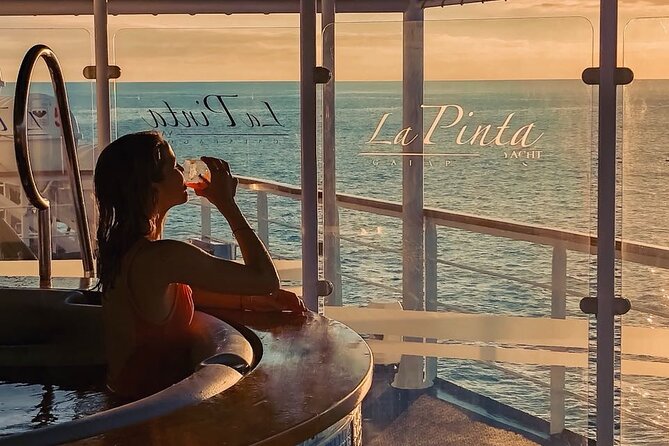
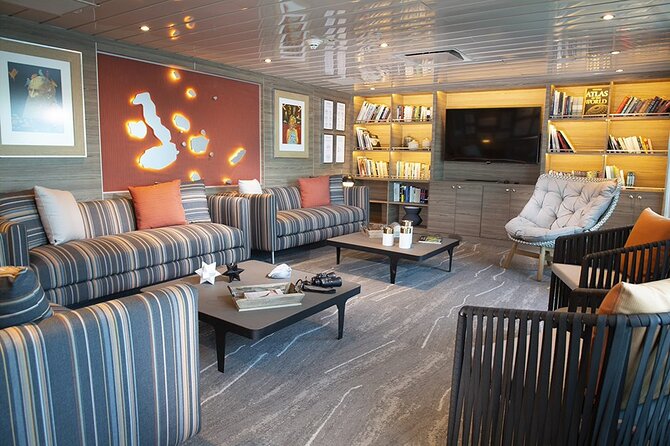
The ship is designed for an active week, not for sitting idle. You have an outdoor terrace, reading room, natural history library, coffee station available around the clock, fitness room, and a jacuzzi. Wi-Fi is available, but the connection is intermittent and low-bandwidth because of the remote setting.
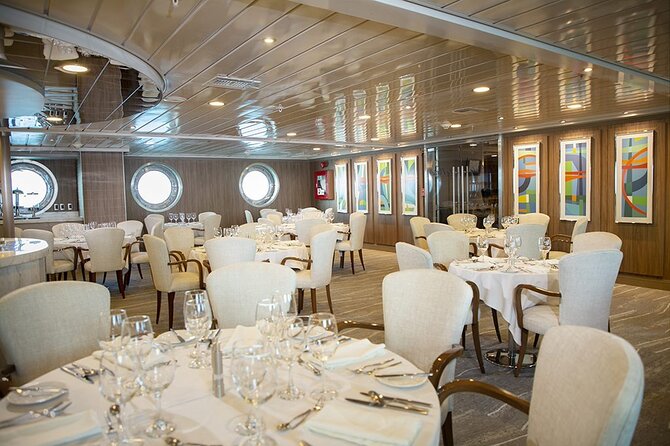
Cabin service is a strong part of the experience. The daily routine includes frequent housekeeping, and the crew learns your preferences as the week progresses. Meals range from casual deck lunches to more formal dinners. Soft drinks and alcohol cost extra.
The onboard team includes naturalist guides, panga drivers, service staff, and a doctor. Specific guides named during recent departures include Kathy, Dries, Indi, David, Cathy, Indira, and Desi. Your exact team may differ, but the format remains the same: evening briefings explain the next day’s activities, clothing, footwear, and equipment.
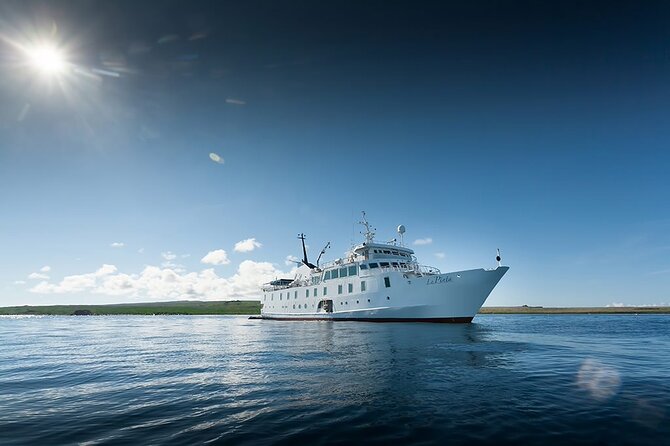
The group size is a sweet spot for many people. A ship carrying around 48 passengers gives you more amenities than a tiny vessel, without the crowds of a much larger cruise ship. You will still share outings and meals with other people, so this is not a private yacht experience.
How strenuous is this seven-day cruise?
You should have a moderate fitness level. The challenge comes less from one long hike than from repetition and changing conditions.
Expect rocky or slippery surfaces, wet landings from pangas, uneven trails, and occasional uphill walking. Snorkeling may take place in choppy water. Getting into and out of small boats can be awkward when the sea moves.
The guides help, and easier options may be available when a more demanding hike is offered. Still, you should be comfortable walking for several hours in warm conditions, climbing into a panga, and changing from land activity to water activity during the same day.
Bring sturdy waterproof sandals or walking shoes, a hat, UV-protective long sleeves, a swimsuit, and a reusable water bottle. The ship supplies wetsuits and snorkeling equipment. Pack light, but do not skimp on footwear.
Who should book this Galápagos cruise?
I would choose this trip if you want a broad Galápagos route, strong wildlife potential, and a polished onboard setup. It suits couples, families with adult children, and active older travelers who can manage uneven ground and boat transfers.
It is also a good fit if you want guidance at every stop. The naturalists explain species, geology, and conservation rather than simply pointing out animals. The evening talks help you understand what you saw that day and what to expect next.
I would look elsewhere if you want a very slow holiday, independent exploration, or a low-cost island stay. The days are full, the price is high, and the itinerary can change because of weather, park regulations, logistics, or operational needs.
The cancellation terms are worth reading before purchase. A full refund is available when you cancel at least six full days before the start time. Cancellations two to six days ahead may receive 50 percent, while cancellations within two days are not refunded. If poor weather cancels the experience, you are offered another date or a full refund.
Should you book La Pinta Darwin’s Legacy?
Book it if your priority is seeing a wide range of Galápagos wildlife while keeping ship changes and planning work to a minimum. Fernandina, western Isabela, Floreana, Santa Cruz, and Rabida give you a strong mix of volcanic geology, marine life, birds, tortoises, and conservation sites.
The best value comes from the combination of access, equipment, meals, expert guiding, small-group operations, and nighttime sailing. You pay a premium, but you spend your daylight hours doing what you came to do.
Before booking, confirm the full cost of flights, park fees, transit card, fuel surcharge, insurance, drinks, and gratuities. If those extras fit your budget and you are ready for an active schedule, La Pinta offers one of the most complete ways to see the central and western Galápagos in a single week.
FAQ
Where does the La Pinta Darwin’s Legacy cruise start?
The cruise starts at Galápagos Ecological Airport, also called Seymour Airport, on Baltra Island. The scheduled start time is 10:00 am.
How long does the experience last?
The cruise lasts approximately seven days, from the first arrival and boarding on Baltra through the return to Baltra on the final day.
What meals are included?
Six breakfasts, six lunches, and six dinners are included.
Are snorkeling equipment and wetsuits provided?
Yes. Wetsuits and snorkeling equipment are included, along with kayaks, paddleboards, pangas, and a glass-bottom boat.
Is Wi-Fi available onboard?
Yes, but the connection is intermittent and low-bandwidth because the Galápagos are remote.
What wildlife might I see?
Possible sightings include sea lions, land and marine iguanas, giant tortoises, green sea turtles, penguins, flightless cormorants, Galápagos hawks, flamingos, finches, mockingbirds, whales, and sea turtles.
Are park fees included?
No. The Galápagos National Park entrance fee and Ingala Transit Control Card are not included.
Do I need a certain fitness level?
A moderate fitness level is recommended. You should be ready for rocky trails, slippery surfaces, wet landings, snorkeling in changing water conditions, and getting into and out of pangas.
Can the itinerary change?
Yes. Weather, logistical issues, Galápagos National Park regulations, and operational reasons can require changes.
Fresh on the dock in the world
- Exotic Yacht – Tour through the bay of Cartagena★ 3.7 · 4 reviews
- Xclusive Luxury Yacht Albufeira★ 5.0 · 4 reviews
- Yacht Douro Tour★ 4.8 · 11 reviews
- From Trapani: Favignana and Levanzo Yacht Tour with Stops★ 5.0 · 4 reviews
- Venice: Sunset Yacht Experience★ 4.8 · 11 reviews
- Affordable Yacht Rental Viktoriia from Dubai Marina★ 5.0 · 8 reviews
- Antalya: Private Yacht Tour with 3 Swim Stops and a Meal★ 4.8 · 11 reviews
- Tromsø: Fjord Cruise by Luxury Yacht★ 4.1 · 39 reviews